
Reignite Resilience
Ready to shake things up and bounce back stronger than ever?
Tune in to the Reignite Resilience Podcast with Pam and Natalie! We're all about sharing real-life stories of people who've turned their toughest moments into their biggest wins.
Each episode is packed with:
- tales of triumph
- Practical tips to help you grow
- Expert advice to navigate life's curveballs
Whether you're an entrepreneur chasing your dreams, an athlete pushing your limits, or just someone looking to level up in this crazy world, we've got your back!
Join us as we dive into conversations that'll light a fire in your belly and give you the tools to tackle whatever life throws your way. It's time to reignite your resilience, one episode at a time.
Reignite Resilience
Joey's Song: Mike on Freezing Man and Epilepsy Awareness (part 2)
Use Left/Right to seek, Home/End to jump to start or end. Hold shift to jump forward or backward.
Joey's Song raises money for epilepsy research through a concert unlike any other in the country, and Part 2 of this Reignite Resilience conversation is where hosts Natalie Davis and Pamela Cass get the full picture of how it works. Mike, founder of Joey's Song, continues his conversation with Natalie and Pam by walking through Freezing Man, the two night concert event held every January in Madison, Wisconsin.
Mike describes what makes the show different from a typical tribute concert. Musicians from bands like Cheap Trick, the Goo Goo Dolls, the Bangles, and Tears for Fears do not perform separate sets. Instead they form one time only groups and play together, backed by the house band the Know It All Boyfriends, alongside a rival group called the Know It All Girlfriends who show up every year to steal the show. Mike explains why the event only happens once a year, why January works best around touring schedules, and how the 2,500 seat Sylvie theater sells out two nights running while the concert also live streams for free to anyone, anywhere.
From there the conversation shifts to impact. Mike breaks down how listeners can support Joey's Song without spending money, starting with following the nonprofit's social accounts and watching video content long enough to trigger the platform algorithm. He shares the scale of epilepsy in plain numbers: one in 26 people will develop it in their lifetime, and 50 million people live with it worldwide today. Mike also talks honestly about where epilepsy research stands, including the one in three people who still cannot find relief through medication or surgery, and closes with practical advice for recognizing absence seizures and prioritizing self care as a caregiver.
In This Episode:
- What makes the Freezing Man concert format different from a typical tribute show
- Why Joey's Song only holds one event per year, in January
- How to support the nonprofit without spending any money
- The real numbers behind how common epilepsy actually is
- Where epilepsy research and treatment stand today, and where progress is still needed
Listen to Part 1 of this conversation for the full story behind Joey's Song and the son who inspired it.
Listen to Reignite Resilience: https://reigniteresilience.buzzsprout.com
Learn more about Joey's Song: https://joeysong.org
The Quiet Gift: A Journey of Self Worth and Resilience is now available for download as an audible. Check it out!
Subscribe to Our Weekly ThinkLetter
Facebook
Instagram
Check out our Book Series:
The Quiet Gift: A Journey of Self Worth and Resilience
Magical Mornings Journal
Disclaimer: The information provided in this podcast is for general informational purposes only and is not intended as a substitute for professional medical advice, diagnosis, or treatment. The co-hosts of this podcast are not medical professionals. Always seek the advice of your physician or other qualified health provider with any questions you may have regarding a medical condition. Never disregard professional medical advice or delay in seeking it because of something you have heard on this podcast. Reliance on any information provided by the podcast hosts or guests is solely at your own risk.
Pamela Cass is a licensed broker with Kentwood Real Estate
Natalie Davis is a licensed broker with Keller Williams Realty Downtown, LLC
All of us reach a point in time where we are depleted and need to somehow find a way to reignite the fire within. But how do we spark that flame? Welcome to Reignite Resilience, where we will venture into the heart of the human spirit. We'll discuss the art of reigniting our passion and strategies to stoke our enthusiasm. And now here are your hosts, Natalie Davis and Pamela Cass.
SPEAKER_03Yeah, absolutely. So tell us about the event. What can one expect? We would love to hear all about it. The present day. Yes. Let's do present day. Yeah.
SPEAKER_01Yeah. So the reason why I say that it's really unique is that, so you've heard me name drop Goo-Boo Dolls and Go-Gos and Bangles and Cheap Trick. But they don't come and do a 35-minute or a 40-minute set. They play with each other. So we form super groups all night. So it's not, yes, of course, they'll play their hit. John Resnick from the Goo-Boo Dolls is not going to come and not play Iris. There would be a mutiny if he did. Kurt Smith from Tears for Fears come. He's definitely going to sing Everybody Wants to Rule the World. It's like a law. If they play, they must perform. But the rest of the night, they're doing Beatles covers and stones covers and Motown and Stacks stuff with people. It's literally a bunch of super groups all night. And that's where Butch helps me because he's a music producer and does that. So that's what you can expect. You can expect the lead singer from Fountains of Wayne and the bass player from Eve Six and the drummer from Chief Trick with the girls from the Bengals singing a big star song or something like that. And that's what the entire night is. It's these, it's these FOMO moments for a music fan. These are these moments that are never going to, it's not, we're not going to do the same thing the next night in Des Moines and then the next night in Boulder and then the next night in San Francisco. Which also, though, gives it kind of a bit of a tightrope feel to it, too. Because think about it, these people, it's not songs they normally play with people they don't normally play with. They come in a, they come in for, we do two shows, Friday and Saturday. They'll come in Wednesday night and we'll rehearse on Thursday and Friday, and that's it. But these people are so good. They can, you know, they they speak that musician language. You know, on the third bar, why don't you come in on the second beat with in, you know, and I stand there and go, Did you speak English? Because I don't, you know. But they all remember and they all do it. So I think the re there's lots of reasons why I know people love it and they come back year after year in the audience, is because they can see the artists having, and the artists are having a blast, right? Because they're doing, you know, Butch, when he does interviews, describes it as rock camp for rock stars, right? Because they get to, you know, it's like if you went to a fantasy camp, it's for them, right? Because they get to play with people they don't, again, play with on songs they don't know, and there's no pressure on them, right? When they're doing a headline show, because all these people do big shows, yeah, um, they got to carry the show. Nobody, the event itself carries the show, right? And they're expected to mess up because, and then everybody laughs and the crowd likes to jeer and cheer at them and all that other stuff. Um and honestly, the the the real secret sauce to it is so we've got the know-it-all boyfriends, right? Butch and all the guys. The first year we had a bunch of the the ladies, Tanya Donnelly from Belly, Kay Hanley from Letters to Cleo, uh, the Bangles, as they were walking out that night, said, you know what? We've got to form the know-it-all girlfriends. So now every year we have a battle of the bands as well between the know-it-all boy and the audience cheers. I know this is going to be hard for you to believe, but the boys never win. Never. Oh, never, never, ever. It's shocking. Yeah. And part of the reason is the guys are always trying to show you their virtuosity, where the girls just do like ACDC and quiet riot, and they're just banging the. The girls did it. And everybody looks forward to that as well. So we've got a lot of things in there that are once a year, not gonna happen again, kind of stuff. And the audience feels that. You know, when the boys are out, the girls will come out with signs saying, Hey, why don't you play a song you know? You know, all of those, all of those kind of things. They'll lay down on the amps because they're bored. It's just, it's a ton, it's a ton of fun. Oh my God. And that's what the show is. And you get to see these people as the human beings that they are. As a you know what I mean? You can see them screwing around or not knowing what to play or laughing or all that kind of stuff. And a lot of these people, if you were gonna be 10 feet away from them at a concert, you wouldn't just be paying the 50 bucks you pay in at right. You go see the goo-goo dolls who are coming through in a couple weeks, they're playing the big BMO amphitheater in Milwaukee, which is, you know, tens of thousands of people, you know, you're not gonna be five feet away from Johnny Resnick for 50 bucks and and watch him play Tom Petty songs.
SPEAKER_03So no, you're not.
SPEAKER_01Yeah, and and but going back to the story you asked me, it's because that evolved organically as opposed to here's what we will do. We will have these famous people. If you if you start out doing that, you stub your toe.
SPEAKER_02Well, what makes it so cool is that it's a unique experience every show. That's right. You never recreate that same experience because it's never been done before. And it'll exactly and it ain't gonna happen again. Yeah, yeah. And so how how often do you do these events? Once a week.
SPEAKER_01We do it once a year. That's all I can do.
SPEAKER_02Okay.
SPEAKER_01It's a full week. It it it's it's it's a year-round job. I start, I give myself about a week to recover, and then you you dig right back, right back in. Um, and mainly, I wish we could do more, and maybe someday we can, but because I'm not paying anybody, and these are all still working musicians, that's why we do it in January, because usually you're not touring, usually you're not booking studio time because it's so close to the holidays. So that's really uh, I mean, everybody says, why don't you do it in the summer? It would be much. And I go, I would love to, but everybody's working. And since I'm not paying them, I can't take a paycheck, you know. They're not, you know, Cheap Trick's not gonna stop their tour for four days. So Rick and Dax can come and play our thing. Um, so we do it once a year, but we do two nights, and the nights are different. We have a theme every uh the Friday night. This year we're gonna do um MTV hits. So it's gonna be all those fun MT. Oh, yeah. It's kind of off-kilt like safety dance and video killed the radio star and all those kind of wacky, you know, those fun things. Um, and then Saturday is that kind of world's greatest jukebox thing. But that way I get two shows out. Everybody plays the same, the the same people both nights, so it saves me a little money. But yeah, I would love to be able to do more, but right now, that's about as much as I can do and still stay upright.
SPEAKER_02Yeah, yeah. And so so once a year, and where is it held? Is it in Madison? It's in it's in Madison, Wisconsin. Okay.
SPEAKER_01Um and and we call it we call it Freezing Man is the name of the festival. It's a takeoff on Burning Man. Since we're in Madden, we we we lean into the cold here in Madison. Um but the thing I should let you guys know, and everybody that's listening, we live stream it for free. So you can watch it.
SPEAKER_02Wow.
SPEAKER_01You can be in Bangalore or again or Boulder or Buenos Aires. I'm on a B kick apparently right now. Yes. Um, and you can watch it live and be a part of the community because this isn't yes, it's about raising money, but there's so much that we need to do about awareness and acceptance.
SPEAKER_02Absolutely.
SPEAKER_01And all of those things, especially around a disorder like epilepsy, that our job, yes, it's to raise as much money as we can, to give it to the smart people to find treatments and cures. That's why everybody volunteers their time. But it's also about building that community. I recommend coming to Madison because A, we're one of the best towns in America. B, being there to experience it, it's a whole nother level. Certainly watching it on it, but to be there and have these famous musicians so close as part of it is that. But yes, it's it's that first or second weekend in January, depending on what New Year's does to us, because I don't want people flying in over New Year's weekend, you know, to do that. It's it's at a really new state-of-the-art theater here called the Sylvie. It's a brand, it was built to be a music theater. It holds 2,500 people and we we fill it two nights in a row. Um and it's a ton of fun. Oh my gosh, how incredible.
SPEAKER_03Definitely a stretch from I hope we can cut a check for $500. Yeah.
SPEAKER_01Yeah. Yeah. Yes, yeah. It's a long way. Wouldn't be the first time I got things wrong.
SPEAKER_03That's the right thing. But this is this turned out the right way.
SPEAKER_01So it's the right way. Yeah, yeah.
SPEAKER_02Yeah.
SPEAKER_03Well, Mike, other than attending the event, how can our listeners support Joey's song? Are there other ways? Do you do a live fundraiser while it's live streaming or other ways to contribute throughout the show?
SPEAKER_01So let's first talk about the ways you can do it without spending any money. There's a bunch of things anybody listening can do. There's two big things you can do. The first is the dreaded algorithm on social media. Dun dun dun dun. Right. How does stuff pop up on people's feeds? It's follows, not likes, and it's watching the videos. The more you watch even a 30-second video, if you watch 20 seconds of it more than 10, it feeds the magic algorithm. So what your listeners can do is find us on Facebook or Instagram or all the social media, we're Joey Song on all of those things. So if you just find it and follow us, not just like it, but follow the feed. And if it pops up, even if you don't want to watch the video, let it run for the 30 seconds, because then the the overlords at Meta say, people like this, show it to more people. Right. So that so that's one thing you can do that doesn't cost you anything more than 25 seconds of your time is to do that. The second thing people can do for us is talk about this with your friends, neighbors, down at the club, wherever you might be, because we all take recommend personal recommendations, right? If somebody says, hey, you should go see this movie or try this restaurant, you do it, right? Yeah. So if if people can because you never know, see, epilepsy is such a hidden disorder because there's no physical manifestation of it unless somebody has a seizure in front of you. And because when it does manifest itself, it's kind of embarrassing. It shouldn't be, but it is. If you drop to the ground shaking in public. So we need people to talk about this, and you never really know. So we haven't even gone through the stats. One in 26 people will develop epilepsy in their lifetime. One in 26. Wow. 50 million people worldwide have epilepsy as of today. So to put those, put those numbers in perspective, if in your neighborhood there are seven houses and each house has four people living in it, it's going to be one person in your neighborhood with epilepsy in just those seven houses.
SPEAKER_02Wow.
SPEAKER_01Or, um, and I always do this with simple math because I'm a marketing guy, not a math guy. If you're in your local football stadium and there's 26,000 people sitting there when you're in Colorado watching the Broncos, um, 26,000 people, a thousand of those people are gonna have epilepsy. So that tells you, and so I can't tell you the patrillions of times I've been talking to people, and after about three minutes, they go, Oh, yeah, my cousin has epilepsy, my brother has epilepsy. You know, it's it's so common. But it's not the kind of thing that you talk about or can see.
SPEAKER_02Yeah.
SPEAKER_01So if you tell friends about it, that that does it. And to be now to get into the business side of it, and somebody out there is gonna know Melinda Gates, and she's gonna hear about this, and she's gonna want to write us a check for a billion dollars to solve this. So, you know, go around and talk about it. So that's the way, those are the ways that your listeners can help us without spending a lot of time or a lot of money. And that's really, really impactful. I can't, I can't express enough how impactful that is to get that social media algorithm on our side. Then the other thing you can do is obviously make a donation or those kind of stuff. So if you go to joeysong.org, so everything's Joey Sung. That's the great thing about having a unique name like this, is all you gotta do is type in Joey Sung. You're gonna find us. Yeah, right. Because there's nothing, you know, other than Bill Haley had a song, but Bill Haley in the Comets had a song like in 59 that pops up, and there's another mother who has some, but you you'll find us.
SPEAKER_03It's you. Um, yes.
SPEAKER_01And and we do, if you'll bear with me for one minute, we do all sorts of special auctions. This is a bag full of Vicky Peterson of the Bengals worn clothes from stage and other stuff. Oh my god. We're gonna do special auctions of that soon. Vicki and I got together a couple months ago. We did a video and she tells the story behind it. We do that. Our several of our artists are um designing their own special Joey Song t-shirts. They do the design with their own why it's important to them or whatever it might be. Uh Butch has done one, Jane Weatlin from the Go Go's, Vicky's done one. So there's lots of ways. Um we like to do unique things, as you can tell. You know, and you know, there's there's not another one of all these shirts, and we only make a hundred of those artist shirts. So you'll have one of a hundred, and then we, it's like a hummel. We break the mold so they can never do another one after that. Um, and that that you can by following us again on the socials or joeysong.org. There's a mailing list and you can find out about all that stuff. But really, to be honest with you guys, if you do the first one, it'll lead to the second one. If you help us spread the word, yes, I know you guys have asked a lot of questions about when did you know and how does it feel and all those things.
unknownYeah.
SPEAKER_01Because people, every time I have these conversations, I get this reaction. I know if we can continue to build our community and it starts to build geometrically, all those donations and dollars are gonna come. Right. So if it honestly, and I mean this sincerely to your listeners, if it's between you sending me 20 bucks or liking and following and telling everyone you know, I'll take the second one because that's gonna, that's gonna really geometrically build. Yeah. And we'll get that 20 bucks from you. Certainly send me the 20 bucks. I'm not saying you shouldn't, but yeah, yeah. And yeah, and I guess the other thing that we didn't talk about, besides us being volunteer, all of our money, besides that little bit we send to Guatemala, goes to market to research, to epilepsy research. That's what we as a family focus on. Yeah. Um, so we're giving the money to the smart people in the lab coats with the test tubes so that one of them can have that voila moment. And again, I show my age by saying Bunsen burners and test tubes, because I know it's all done with computers and algorithms, but I I can see her in my head. There's a woman in a lab with her hair pulled back and those goggles on that you wore in science class, and she's mixing two test tubes together, and one of them's gonna turn lime green like it's supposed to, and she's gonna go screaming, I did it, I did it, you know. And and and that's gonna stop this from happening. And I will be sure that we bought that test tube. I will be, I nobody will convince me otherwise that we didn't buy that test tube. Yeah.
SPEAKER_02Yeah.
SPEAKER_01So anyway, see, get me going on this, and I don't stop.
SPEAKER_02Have they made any progress?
SPEAKER_01It's a great question. Yes and no. Okay. So let's talk about the no first. Um, one in three people still can't find relief through either medication or surgery, meaning they don't know when the next seizure is going to hit. That number has been pretty consistent for a long time. What they have made progress on is the nasty side effects that have come with it, as because you're doing brain medicine, right? You're doing medicine that's affecting how your brain works. And the more refined that can be, the better it is. So that part, they have made a lot. And it's this is these aren't definitive black and white statements, obviously. There's room around the edges, but as a grand statement, that's where a lot of the progress has been made. These the different medications have less of an impact. They don't make them drowsy or groggy or you know, all those other things. There's been a lot of progress on that. And in some of the cases, you know, again, epilepsies like cancer, there's not one epilepsy, right? There's the epilepsies. So there may be some where they've made more progress than others, depending on that. They have made some. And honestly, you know, minimizing the impact of the side effects is really important. That's a quality of life issue, right? You know, if if every time you take your meds every morning, you know, you don't feel like doing anything all day. It's an impact. What's that, right? You know, maybe there's some people that go, I'd rather have a seizure and be able to do something today. Um so they have made progress, but not we really need to take that one in three number down. We really need to because if you're an adult, especially with uncontrolled seizures, you can't drive. Yeah. There's a lot of jobs, you know, because you can't be behind the wheel of a car when a seizure strikes, right? And you can't, you know, that limits the ways you can work. It makes going to buy groceries an issue. It makes just getting around an issue. So we really need to make some progress on that one in three number because while I focus particularly on the pediatric epilepsies because of Joe, in general, uh, you know, epilepsy is non-discriminator for age, income, race, religion. It affects everybody. And we need to find ways to take this out of people's lives.
SPEAKER_02Absolutely.
SPEAKER_01Yeah.
SPEAKER_03That is just staggering data. So thank you for sharing that, Mike. I think that's an important piece. And um and the importance of of people like truly being intentional about um self-care, right? Like taking care of their wellness. And if if something feels off, go and check it out.
SPEAKER_01Uh you know, you you bring up a really great point because one of, and this is something I always try to do whenever I speak to a crowd as well. There is something, one of the ways that epilepsy manifests itself is in something called absence seizures, which is just staring off into space. That is, that can be a seizure. And if you've got a especially if you've got kids, and you know, sometimes Billy just stares off into space and I can't get him back. It might just be that Billy's a space cadet. I know I was. Yes. But it may be that Billy's got epilepsy, right? And and that's why one of the one of the initiatives is training teachers so they know what to recognize. So my point is understanding the ways that it manifests itself. And that those absence seizures are the important one because we all know that person that where I wonder where Mike went for the last 30 seconds. Well, maybe Mike was, you know, Mike was having a seizure kind of stuff. Yeah. Um, take care of it. But Natalie, I wanted to focus also, though, on one of the things that you said about self-care because one of the other things I tell people, if you're a caregiver, like we were for Joe, one of the other things to do is take care of yourself too, because that person is reliant. That person that you're giving the care to needs you at the top of your game. And it's real easy to sacrifice your sleep, your health, your exercise, your diet, whatever it might be. And sometimes you have to do that. I'm not saying you never sacrifice, but that person needs your you at the top, because you're going to be their advocate with the medical profession. You're going to be their advocate on what's affecting them. So self-care, even if you don't have epilepsy or any other disorder, but are a caregiver to somebody that does, don't shortchange yourself on that because you're actually shortchanging them if you're not at the top of your game.
SPEAKER_03Yeah. So I think that's a great reminder. Yeah. That's such a great reminder, Mike. Yes.
SPEAKER_02Yeah. Is is there a good place for people to go to get resources to educate themselves? Yes.
SPEAKER_01Yes. So there's there's two different ways that I would take. First of all, there is the Epilepsy Foundation, uh, EFA, and I think it's epilepsy.com, is their thing. That is the the storage, the warehouse for all the research and is the first place anybody should go because they will tell you the local resources, whether they're support groups or awareness programs or whatever else it would be. So that would be your first one. And second of all, find a neurologist, not just your doctor. Doctors are great, general practitioners are great. But after they try to figure out if you have epilepsy, they're going to be taking care of my bad hip. And then after that, they're going to be taking care of my bad hearing. See, you turn 65, you fall apart, kids. That's the other word. Of warning. Um, a neurologist is focused on the brain, and most of them are well schooled in uh epilepsy. Now, depending on where you live, there's not neurologists around every corner. But if you're lucky enough to live in a place like Madison, which has the university, or Boulder, or any of those places, they're usually not too far away. And I would find myself a neurologist. Those are the two things because you know, GPs are doing their best to understand everything. Neurologist understands a target of so epilepsy foundation to find out local programs and resources and and those things, and then find yourself a specialist as soon as you can because that will shorten the time of uncertainty and at least start to get you or your loved one on a path.
SPEAKER_03I think that's perfect. Beautiful. Mike, I want to say thank you. Um, thank you for the work that you're doing. And I feel that um the ripple effect of Joe's life that continues with us uh all of these years, decades now later, uh is huge and tremendous. And thank you for answering the call. I think that's the biggest piece, right? Because it's a heavy lift. This is a volunteer, um, it's an act of service that you are uh bringing together. It takes an entire year to br pull off, you know, a two-day event, and uh, but the impact is long lasting. So thank you for what you're continuing to do. Thank you.
SPEAKER_01I appreciate that. Yeah, I really do, I really do.
SPEAKER_03Yeah, that is huge. Oh my gosh. Uh we went everywhere, I feel, and in between. Is there anything that we didn't touch on, Mike, that you wanted to make sure that we shared with our listeners tonight?
SPEAKER_01No, I don't, I don't think so. We talked about the prevalence of epilepsy, we talked about the impact of it, we talked about the progress made, we talked about how cool what we do is, and I'm okay doing that. Uh, we talked about how people can help and how they can help even if they're not in the Midwest or don't want to come and freeze with us. Um I can't think of anything else. I could we could do a whole nother hour and I could tell you really cool behind the scenes rock star stories if you'd like. Oh, well, that's you know, I'm maybe we'll do that when you don't have the record button going. Maybe that's just the three of us in a bottle of wine.
SPEAKER_03That's it. I was like, those are still stories I'd like to hear. I don't know if we need to record them.
SPEAKER_01Yeah, yeah. No, I I I think we've covered it. I like I for your audience. We really need your even your just your emotional and technological support. Your money's great, but if you give us those other two things, the dollars will follow.
SPEAKER_03Yeah. Absolutely. And we'll make sure that we tag Melinda Gates in our social media post because she has to hear the message. I mean, we've talked about her. It only makes sense that we tag her. Absolutely.
SPEAKER_01I I'm sure that she's sitting on her phone searching hashtags all the time to see if people yeah.
unknown100%.
SPEAKER_03Well, and it's so interesting that you mentioned her because I just recently, I think this week or maybe last week, there's the video that that went through that goes into all of the organizations that she's been um contributing to and and um uh making investments in over the last couple of years. And why not?
SPEAKER_01So we yes Absolutely Absolutely. Yeah, no, we need to let her we need to let her know that she needs to be in Madison in January and she needs to bring her checkbook.
SPEAKER_03Yes, perfect. I love it. Love it. We're putting the call out now and we're collectively thinking about it. So whatever you're doing in January, clear your calendar.
SPEAKER_01Come on. Freezing, who wouldn't want to come to an event called Freezing Man?
SPEAKER_03Freezing Man, absolutely. I was just thinking we're giving everyone ample time to secure a new fur per piece, an article of something.
SPEAKER_01Buy those hand warmers. You know, if the event is indoors, yeah, so it's it's not like you know, it's not like we're having a picnic in January. No.
SPEAKER_03Yes.
SPEAKER_01No.
SPEAKER_03I love it. Oh my gosh. Mike, this has been wonderful. Thank you, thank you, thank you. Um, and we are wishing you the best of luck with Joey's song and everything moving forward. We will make sure that we remind our listeners to like and follow and watch. Like spend the few moments to watch it so that the algorithm is in train to let the powers that be behind the scenes know that we like it and we want to see more of it.
SPEAKER_01It's insane the impact that that can have, but that's the world we're in now.
SPEAKER_03That's where we are. I am that.
SPEAKER_02I love it.
SPEAKER_03Everyone's vying for our attention. I get it. That's it. And why not lead them that way? Yes. Yes. I love that. We will put Joey's song. It's joeysong.org is the website. We will make sure that we put all of the Joey Song information and Mike's information in the show notes. And uh for any of the social media assets, we're gonna make sure that we tag Miss Melinda Gates. Yes. Um, and for our listeners, you heard the call. We would love for you to go out, engage with Joey's song content so that you can continue to get them on your friends' family and loved ones algorithm so that they can learn more about what Mike is doing here alongside his fabulous volunteer friends, family and loved ones. Absolutely. Shout out to all of them as well because I know it's a heavy lift. Um, so I want to say kudos to you, the team that you've built, and this program that you have put together. This is absolutely phenomenal, and we are truly honored to have had you on the show, Mike.
SPEAKER_02Thank you guys. And and have a fantastic rest of your birthday.
SPEAKER_01Yeah, well, my Julia Julia is Julia's already upstairs, and Sam's coming home from work in about 30 minutes. So I got the rest of the night with my kids and my wife.
SPEAKER_03I love it. Enjoy. And thank you for spending a part of your birthday with us. That's a treat in itself.
SPEAKER_02Yes. I love that.
SPEAKER_03For listeners, you all know the deal. If you have not subscribed on your favorite streaming platform, go ahead and do so now and head on over to all of the socials and follow Joey's song as well. Um, until next time, we will see you all soon.
SPEAKER_02Bye everyone.
SPEAKER_00Thank you for joining us today on the Reignite Resilience Podcast. We hope you had some aha moments and learned a few new real life ideas to fuel the flames of passion. Please subscribe on your favorite streaming platform, like or download your favorite episodes, and of course, share with your friends and family. We look forward to seeing you again next time on Reignite Resilience.


Podcasts we love
Check out these other fine podcasts recommended by us, not an algorithm.
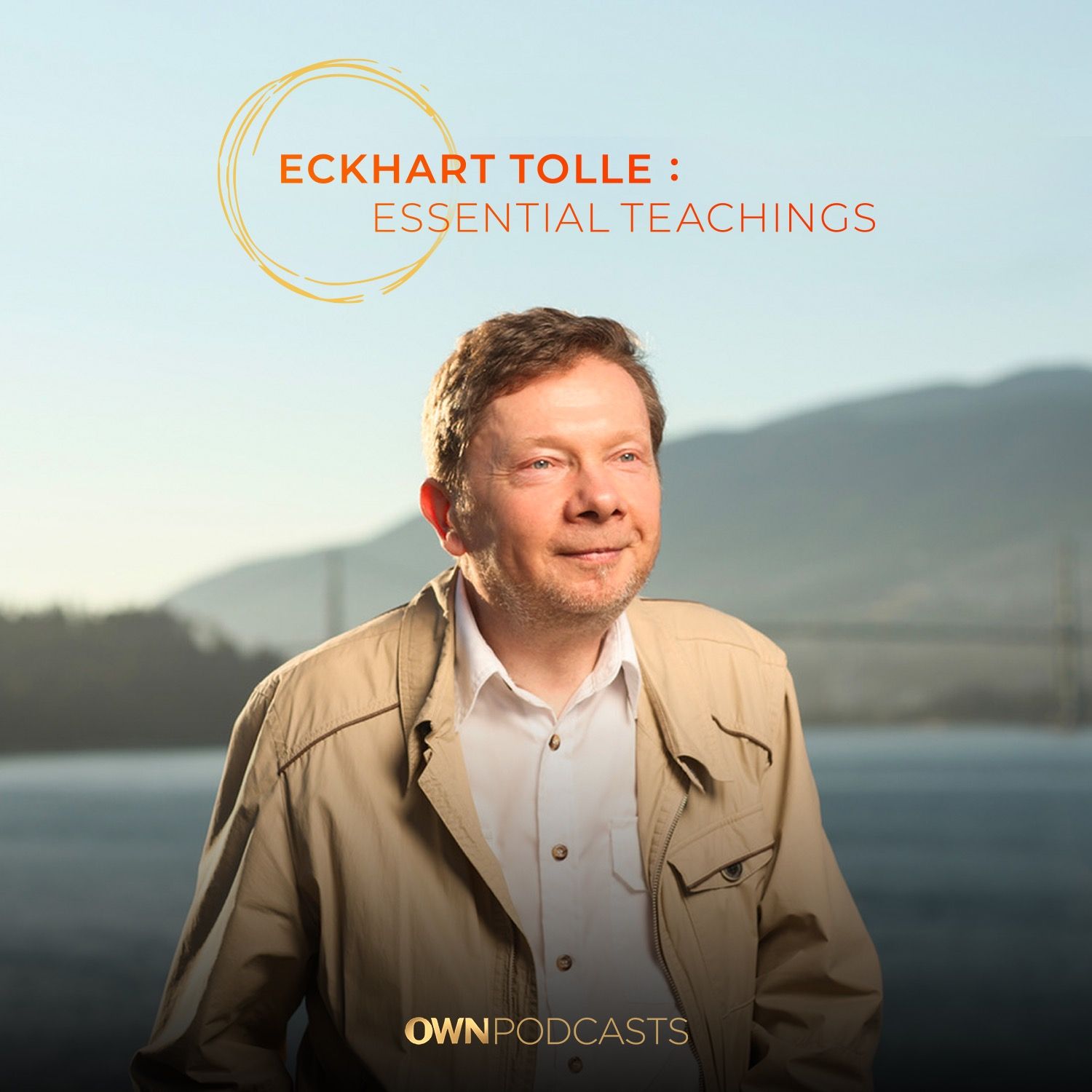
Eckhart Tolle: Essential Teachings
Oprah and Eckhart Tolle
I Love Coaching Podcast
I Love Coaching Co.
