
Reignite Resilience
Ready to shake things up and bounce back stronger than ever?
Tune in to the Reignite Resilience Podcast with Pam and Natalie! We're all about sharing real-life stories of people who've turned their toughest moments into their biggest wins.
Each episode is packed with:
- tales of triumph
- Practical tips to help you grow
- Expert advice to navigate life's curveballs
Whether you're an entrepreneur chasing your dreams, an athlete pushing your limits, or just someone looking to level up in this crazy world, we've got your back!
Join us as we dive into conversations that'll light a fire in your belly and give you the tools to tackle whatever life throws your way. It's time to reignite your resilience, one episode at a time.
Reignite Resilience
Stress Reset + Resiliency with Jenny Evans (part 1)
Use Left/Right to seek, Home/End to jump to start or end. Hold shift to jump forward or backward.
Resilience is not only in your mind. It is in your chemistry. In this episode, Jenny Evans, global speaker and resilience expert, explains how your body’s stress response impacts your ability to recover from challenges.
You’ll learn how cortisol puts your “Sneaky Pete” brain in charge and shuts down logic and creativity. Jenny shares how a 30 to 60 second “microburst” of physical activity resets your brain chemistry and restores clear thinking.
Jenny also opens up about her journey from small-town beginnings to global expert and how her bold approach to opportunity shaped her career. We explore the power of a personal “beliefs manifesto” to silence negative self-talk and guide authentic decisions.
This episode gives you science-backed tools to handle stress, boost energy, and perform under pressure.
Listen in and learn how to quiet your Sneaky Pete, reset your chemistry, and strengthen your resilience.
The Quiet Gift: A Journey of Self Worth and Resilience is now available for download as an audible. Check it out!
Subscribe to Our Weekly ThinkLetter
Facebook
Instagram
Check out our Book Series:
The Quiet Gift: A Journey of Self Worth and Resilience
Magical Mornings Journal
Disclaimer: The information provided in this podcast is for general informational purposes only and is not intended as a substitute for professional medical advice, diagnosis, or treatment. The co-hosts of this podcast are not medical professionals. Always seek the advice of your physician or other qualified health provider with any questions you may have regarding a medical condition. Never disregard professional medical advice or delay in seeking it because of something you have heard on this podcast. Reliance on any information provided by the podcast hosts or guests is solely at your own risk.
Pamela Cass is a licensed broker with Kentwood Real Estate
Natalie Davis is a licensed broker with Keller Williams Realty Downtown, LLC
Introduction to Reignite Resilience
Speaker 1All of us reach a point in time where we are depleted and need to somehow find a way to reignite the fire within . But how do we spark that flame ? Welcome to Reignite Resilience , where we will venture into the heart of the human spirit . Resilience where we will venture into the heart of the human spirit . We'll discuss the art of reigniting our passion and strategies to stoke our enthusiasm . And now here are your hosts , natalie Davis and Pamela Cass .
Speaker 2Welcome back to another episode of Reignite Resilience . I'm your co-host , natalie Davis , and I am excited to be back with everyone today . And , of course , pam Cass is joining us . Hello , pam , how are you ?
Speaker 3Hello , I am fantastic . We're finishing up what's been the longest week for a short week in my life . And this morning you know I don't try not to look at my calendar until the morning of when I'm kind of prepping for the day I had no idea we had a recording today and I was like I thought I was like workout this morning . The rest of the day I could just leisurely like catch up on stuff and I'm like , oh well , nevermind .
Speaker 2Then no , we are . We are in recording session .
Speaker 3In recording session , so super excited to be here .
Speaker 2This is not our normal time . We're doing this like smack dab in the middle of the day . We usually record in the evenings , and so I'm glad that we were able to get a guest to join us midday midday on a short week . And I don't think it's us or our calendar when we have these short work weeks . I think it's because everyone around us is operating in a state of chaos . So then we're just like wait , what's wrong ? What's happening ?
Speaker 3To the vortex of it . Yeah , exactly .
Speaker 2Well , in that same breath , then we have a perfect guest that's joining us today , but why don't you tell our listeners who's
Meet Jenny Evans: Global Resilience Expert
Speaker 2joining us ?
Speaker 3Yeah , I am so excited . So today we have joining us , jenny Evans . She is a global speaker , coach , author and organizational consultant on psychology and chemistry as it relates to resilience , confidence , performance and women's leadership . She is highly experienced , having worked with thousands of C-suite executives , leaders and employees from corporations , associations and universities across the globe . Her dynamic presentations and company-wide initiatives both educate and inspire audiences by linking the stressful challenges of everyday life to the body's own chemistry and psychology . Welcome , jenny , we are so excited to have you here today and I think this is just a perfect topic for us today and in this week . Yeah , really excited to have you here today and I think this is just a perfect topic for us today in this week .
Speaker 4Yeah , really excited to be here . I mean it's funny , as we were talking about how this has just been such a chaotic week and you just get caught and stuck in the minutia and the frustration . That was really nice to hear my bio of , like , wow , I do actually accomplish things . Yes , maybe like somewhat frequently , but this week where you're just like why is life trying to push me backwards ?
Speaker 2Yes , Exactly , exactly , absolutely . I would have to say that you've got some big checks there on yes , you've accomplished it . Check the box . Yes , that to-do item is complete . Have that gratification and fulfillment , please . Yeah .
Speaker 4But I'm sure , like most people , I usually have my blinders on and I'm almost always only looking forward at what hasn't been done yet , what still needs to be accomplished , which I think this is a good , probably a good reminder for all of us is , you know , on the regular , acknowledging the things that we have done and the successes that we have had and how . I think that just gives us confidence and resilience to be yeah , I do a lot of hard stuff and I do make forward momentum Celebrating those wins along the way .
Speaker 4We forget to do that With champagne is even better .
Speaker 2Oh well , yeah , You're speaking my language . Well , jenny , we heard your bio . Why don't you tell our listeners a little bit about yourself and how
Jenny's Journey From Small Town to Global Stage
Speaker 2you found yourself in this line of work , helping people around the globe ?
Speaker 4I am honestly one of those people that my wife hates , where you're like just do what you love and the money will follow , you know . But I started out as somebody who grew up in a really small town , was not very confident , not very coordinated , played pretty small . But as I grew up I actually got the courage to leave my tiny small town that I grew up in , went to college in the Twin Cities at the University of Minnesota , and I started teaching fitness classes there because I had a dance background , because I was so uncoordinated as a kid I managed by myself to knock out my front tooth by the root . I had stitches twice on my face . I was such a klutz where my mom was like girl , you need an intervention , I'm signing you up for dance class just because you need help .
Speaker 4So that was such a pivotal thing , starting to teach fitness , because I didn't see myself as a jock . Anybody who was athletic or necessarily fit . For me it was just an extension of my dance background . But just having to learn just even the basics about anatomy , exercise , physiology , how your body and brain actually work , just blew my mind wide open . And I was originally going to school for psychology but exercise physiology , I was like we might change the focus here , and then I was also minoring in American Indian studies and one of those things where you're like one of those things where you're like Jenny , focus what are we doing here ?
Speaker 4But in hindsight it all played out so well because what I didn't realize , what I was really doing , was learning mind , body and spirit from a scientific perspective , which really informs my work today , because it's really all grounded in what I call body science , soul science and brain science , and coming at those three things both from a chemical , biological , physiological perspective as well as a psychological perspective . And so I love this field , because there's still so much that we don't know and understand about how our bodies really work , how our brains really work , and so I love that I'm continuously learning and then figuring out . Okay , now , how does this apply ? How does this apply to me , how does this apply to my audience ? How does this apply to what's happening in business currently , Like what's happening globally ? It's just a fun , delicious space to be in , Wow .
Speaker 2I love that you had that moment with yourself like , okay , what are we working on ? Right it's , you've got psychology and American Indian history and physiology and sports , and I mean you're in three different schools .
Speaker 4When you're at the university , yeah , yeah , but yet you brought it is all of the same school , when you really , because your brain is an anatomical organ , it is part of your body , soul and center and purpose is , you know , energetically , so much of what energizes us , drives us , helps us with decision-making . Boundaries . Prioritization yeah , while it seems like I went in a whole bunch of really random directions , the beauty of it is that it is all one unified thing really .
Speaker 3Yeah , it's all very much connected . So you were going to school , you were teaching fitness classes and then how do you go from that to C-suite executives and speaking ? Great question .
Speaker 4Big
Understanding Soul Science and Confidence
Speaker 4gap . Yes , I fell in love with the aspect of fitness and I specifically remember one like magical moment . So there was a female university professor who was coming to my fitness classes and she was one of those invisible participants where she just she came late , she just kind of snuck into the back of the room like never drew any attention to herself . But over the weeks , as she kept coming , she started becoming more visible . We started having more conversation . She started like moving a little bit forward in the class . I could see how she was carrying herself differently and when we had a conversation about this , how she was transforming physically by moving her body by , you know , great nutrition decisions . As she was transforming physically , she was transforming psychologically . And that was the big moment for me where I was like how freaking cool is that ? And so I decided , instead of going the psychology route , I wanted to go to the exercise physiology route .
Speaker 4But remember , not sporty , not a jock . I'm like I'm not going to work in a gym , I'm not going to be a coach , like that's not my jam . So I was like I'll start my own business . So I did , and it was training a lot of busy , professional women . I would lug all of this equipment to like their office or their home . One of my clients was a radio personality and she was doing a story on . Aveda used to have this spot in Osceola , wisconsin , and so she's like they're inviting me for a weekend to experience all of their signature treatments and food , and she's like I can bring a guest . Do you want to come ? And I'm like , oh , let me think about it . Yeah , so long story short .
Speaker 4I got hooked in with Aveda and I became their corporate director of well-being and they did such an amazing job of fully integrating wellness into your employee experience , into the products , into the business model and the founder . Anytime there was a global sales meeting or Congress , he would just say Jenny , you've got 20 minutes , go on stage , do whatever you want , talk about whatever you want I was like to do of being able to be with a big group of people , share information and literally watch their faces as they're having these aha moments where they're thinking what Nobody ever taught me that before , nobody ever explained that to me before . To watch them have that emotional journey where they're having a realization , where they're like , oh my gosh , what have I been doing ? I've been ignoring this , I'm out of alignment and then taking them on that journey to giving them the tools and the strategy and the motivation to just start thinking like , okay , I can do this , I can take myself to the next level of me . And then Aveda got acquired by Estee Lauder , so I started working for a lot of the different Estee Lauder brands . That exposed me to the Human Performance Institute in Orlando , florida , dr Jim Lehrer and Dr Jack Grapple , two of the most renowned performance psychologists . I came onto their team as well and started speaking on behalf of their content and clients .
Speaker 4So it's one of those things that one thing just leads to the next , leads to the next and the next thing . You know , I'm traveling around the world on stages in front of thousands of people CEOs , managers , employees and it's awesome . Like if nine-year-old me , I love to play this little game . Like we're all sitting in the classroom and we're all nine years old and somebody comes in and they start going around the classroom and they start saying , pam , here's what you are going to be doing when you're whatever 40 years old . Natalie , here's what your life is going to be doing when you're whatever 40 years old , natalie , here's . Here's what your life is going to be like when they came around to me , I would have just thought you have got to be kidding .
Speaker 4There is no like , that doesn't even exist . How , what ? Why I like to say yes to things ? Because , honestly , one of my life philosophies is what is the worst that could happen ? What is the worst that could happen ? What is the worst that could happen we catastrophize so much . As an entrepreneur and a business owner who never took a single business course life , Every time like something I don't wanna say bad , but you're like okay , wow , that did not go as planned . The way I look at it as well , that was a semester of business school . Maybe that just cost me well , that was a semester of business school , you know . Maybe that just cost me 20 grand , that mistake . Well , business school is expensive . Or okay , that launch didn't go well . There's four months down the drain where you're like well , that's about a semester of college . So it's all about how we learn and grow along the way .
Speaker 2I love that analogy , Just like reframing it right Reframe how you think about it .
Speaker 4Yeah Well , I feel like you can either laugh about it or you can cry about it . I personally , I really enjoy laughing , so that's usually going to be my choice , if I can .
Speaker 2Well , jenny , you touched . I think this is your answer , is built into what you just shared with us , but I want to really dive into it and not miss this , because when you say that , like one thing led to another , that led to another , just another door that opened , who is that person that shows up ? Right , because there are opportunities that come before all of us at knowing , like when to say yes , and not questioning and having the self-doubt and and all of that . So , as I mean door after door after door and opportunity open up for you , who are you ? How are you in those spaces ? I love this question .
Speaker 4Thankfully , because of the work that I do , I really benefit the most
The Chemistry of Stress and Resilience
Speaker 4and here's what I mean about this A big part when I talk about soul science like what , jenny ?
Speaker 4What the heck is soul science ? That's what I really refer to as the work of really understanding who we are . What do we value , what do we believe , what is our sense of purpose , what are our life's missions ? And that work that I have just done for myself not only helping other people with that , but doing that for myself has given me a level of confidence that nobody should really honestly have . I am driven by a sense of purpose because I a stupid sense of confidence and courage and ability to take risk . And it's not to say that there's a lot of times that I'm not scared as hell , that I'm still a little confused . I don't have it all figured out , but just this sense of knowing what makes me tick and what drives me and makes me feel ultimately fulfilled is what gives me the courage to say yes and to be able to play a little bit bigger today than I did yesterday .
Speaker 3So defined purpose and strong belief systems . So you know , you know what you want and even if it's scary , you step into it .
Speaker 4I wouldn't necessarily say that I always know what I want , but help . Knowing my beliefs really kind of helps me to figure that out , because it really is the answer key to your whole life . It is the answer to every single question and it's also the work that I do with my one-on-one clients is , no matter why they come to me , no matter where they're from , what their issue is , we probably spend the first month because it takes that long to really get clarity on creating their what I just call it your beliefs manifesto , because once you have that , you have your answer key to life . So when I say I know what I believe , I have mine literally printed and I keep it in my workspace . I look at it when I do my my really I don't want to say my goal setting , but literally like what are my tasks for tomorrow ? What am I really going to be focusing on ? What challenges am I going to be facing ?
Speaker 4So , for instance , right now , because your , your beliefs can and do change throughout various stages of your life , like when I was a college student versus when I became a mom , versus you know , as our parents age , like things shift and change . But right now , my number one belief and this one has been with me for most of my life . I believe in taking risk , trying new things and continuing to learn and grow , and continuing to learn and grow , like with every fiber of my being . I believe that I know that to my core and that belief , that's what drives me and motivates me and gives me the courage , the confidence , the direction .
Speaker 4You know when I like to call my primitive caveman brain and we can get into this too His name is Sneaky Pete . He's our fight or flight response and anytime , like stress , change anything unexpected , sneaky Pete flips a switch , takes over your brain . This is the fear , the self-doubt , the negativity . He wants to run the show and he loves to just be whispering in my ear telling me like who do you think you are ? This is such a great way , when you're anchored in your beliefs , to really quiet that sense of of doubt , of fear , the pessimism . So what's the process .
Speaker 3You go through to quiet that . So you have your belief manifesto . Then sneaky peek starts like chattering in your ear . We're going to back like way up .
Speaker 4Okay , actually , we're going to back up millions of years .
Speaker 3Okay .
Speaker 4So our fight or flight response , our stress response , starts as a chemistry problem that turns into a psychology problem . So anytime our stress response is triggered , immediately your body is producing adrenaline , noradrenaline , cortisol those stress hormones . They do a lot of different things in the body , but when it comes to our brain , what cortisol does is puts that primitive caveman brain in charge , because primitive caveman brain is hardwired to take action . Okay , so don't think about it , don't make a pros and cons spreadsheet Like this is a life or death situation . Sneaky Pete is like I'm taking action right now because this is about survival and this part of your brain is hardwired to be very emotional , but it's hardwired for negative emotions fear , mistrust , not wanting to take risk because we had to play it safe our ancestors in order to
Microbursts: Resetting Your Brain Chemistry
Speaker 4survive .
Speaker 4Sneaky Pete , primitive caveman part of our brain has no capacity for logic , thought or reasoning . This is basically . This is your brain stem and your amygdala . As our brains continue to evolve , neocortex grew on top of that . I like to think of your neocortex as your Sheldon Cooper . Okay , big Bang Theory , rational data , logic , reasoning , thought , self-discipline , willpower , ability to connect outside of yourself . So you've got Sneaky Pete . His goal is survival . Advanced Brain Sheldon . His goal is really survival for what ? Really survival for what ? It's more driven by meaning and fulfillment and significance . So when cortisol is running the show , you do not have access to the advanced part of your brain . So no amount of mindset work , positive mantras just think your way out of this is going to work , because that part of your brain is completely online .
Speaker 4The number one way , the fastest way , to rid your body of cortisol is what I call a microburst . So fighting and fleeing , what did those things have in common ? They were a short burst of intense physical activity . And when we get that microburst , it actually burns off the cortisol and then signals the body to produce endocannabinoids , endorphins , brain-derived neurotrophic factor , human growth hormone , and what these do is they return your body and brain back to a state of balance . They put your advanced brain back online .
Speaker 4So when you ask me okay , like when Sneaky Pete's running the show , what do I do ? Microbursts are a regular part of my day . I'm talking about physical activity . So this can be any number of things . This can be . You recognize , oh boy , that sales call did not go well . And you're like oh , I can feel that cortisol and adrenaline Do a microburst and 30 to 60 seconds is all it takes for this chemical switch . But also regular intense physical exercise , high intensity interval training , resistance training is such an essential part of resilience because it is optimizing your chemistry and your physiology . So it's such a great chemical reset . And then that puts your advanced brain back online and then you can start using some of the psychological strategies for resilience .
Speaker 4Then that's where , you know , writing about your beliefs comes in . But I will also say what research shows is when you think about your purpose and your beliefs , when you write about it , when you talk about it , that also does change your chemistry . You get GABA , you get endorphins . And how these hormones are a little bit different is they make us feel happy , they make us feel fulfilled , they make us more extroverted , more goal oriented . So I love teaching people . Man , there are some chemical levers that you can pull inside of your body and brain that are game changing , and you don't have to be a scientist to be able to do it .
Speaker 2And you don't have to understand the science behind it , like you can just do it . Yes , I break it down into here's .
Speaker 4Here's some different micro strategies . Here's one micro strategy . Here's another micro strategy
How Cortisol Affects Every Aspect of Life
Speaker 4. Simple , easy , 30 to 60 seconds makes a huge difference .
Speaker 3That's such a simple reset . It's just , you don't just , don't even think about it .
Speaker 4And that is your body's normal response to stress is to fight or flee . But think of how we've all grown up . Sit in that classroom , sit in that meeting . You're behind the steering wheel in rush hour traffic . You know , our sedentary lifestyles are really not helping with our resilience .
Speaker 2Wow , I love that . I think that's such a great tip , like breaking it down , because the other piece of this , jenny , is like when you're able to kind of change and restructure your chemistry with just these small action items . The same is true on like how our body is naturally responding . We're going through and our body is naturally responding . We have no idea that these things are happening , right , like the stress , the anxiety , the fight or flight responses and however that shows up in our every day . We just look at that as that's a Monday , right , like that's just how it goes every Monday , that's how I feel , and then you go on about life and it just becomes your normal .
Speaker 4Yeah , I like to tell people stress does not discriminate . It is happening inside your body every single day . You have no control over it and , to your point , we're so used to it . It just becomes the norm and you don't even just realize what's happening to your energy , what's happening to your mood , what's happening to your decision making , what's happening to your level of engagement . You know it's , for a lot of people , burnout , and these are not things that just happen overnight . A lot of times it feels like it because there's usually like the straw that broke the camel's back . But this constant stream of cortisol has been happening for weeks , for months , for years , and cortisol doesn't just really change what parts of the brain we have access to .
Speaker 4Cortisol is responsible for insomnia . High levels of cortisol can devastate our immune systems . They make us crave high fat , high sugar , crappy foods . They put the body into fat storage mode . I mean it just the wide ranging effects of cortisol . Most people just really don't understand how much it is affecting literally every aspect of your life thank you for joining us today on the reignite resilience podcast .
Speaker 1We hope you had some aha moments and learned a few new real life ideas . To fuel the flames of passion , please subscribe on your favorite streaming platform , like or download your favorite episodes and , of course , share with your friends and family . We look forward to seeing you again next time on Reignite Resilience .



Podcasts we love
Check out these other fine podcasts recommended by us, not an algorithm.
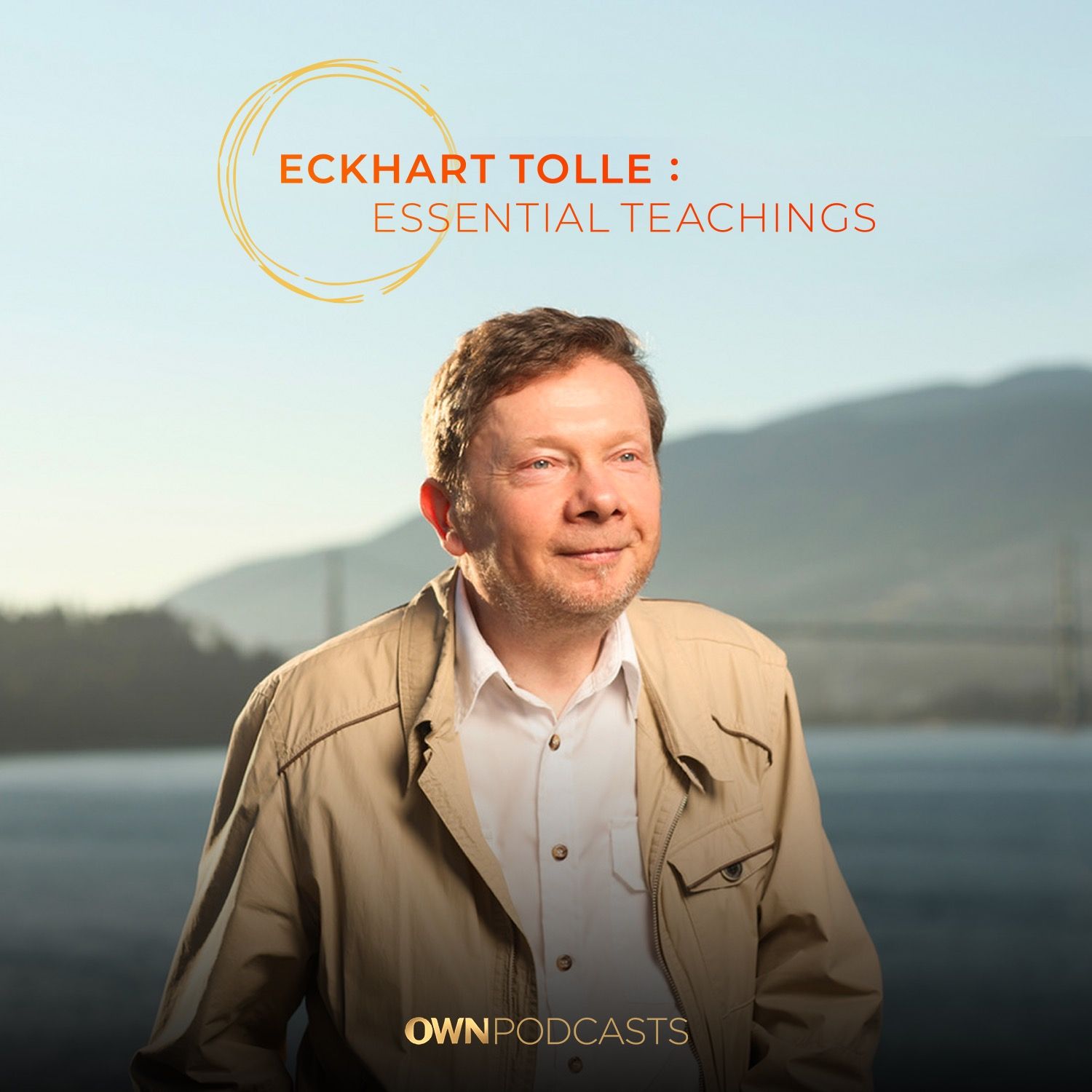
Eckhart Tolle: Essential Teachings
Oprah and Eckhart Tolle
I Love Coaching Podcast
I Love Coaching Co.
